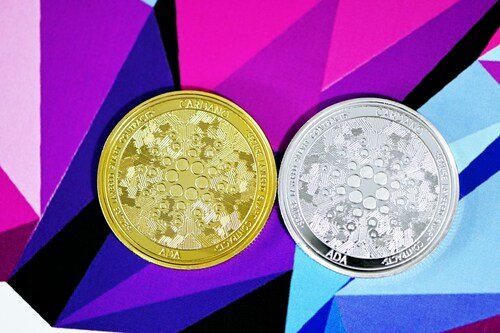
As the next era of internet evolution unfolds, Web3 promises a decentralized digital environment where users own their data, interact peer-to-peer, and participate in digital economies without centralized control.
The question driving the blockchain industry is which network can provide the stable infrastructure required to support this transformation. Cardano has positioned itself as a leading candidate, aiming to become the backbone of Web3 by delivering sustainability, interoperability, governance, and security. Built with a long-term vision and refined through academic research, Cardano presents a framework designed not just for speculation but for global-scale implementation.
Unlike many blockchain networks that emerged rapidly to capture market excitement, Cardano was developed through a layered architecture and peer-reviewed foundation. This methodical approach seeks to ensure durability rather than speed alone. At the core of Cardano’s Web3 ambition lies its proof-of-stake consensus mechanism, offering energy efficiency without sacrificing security. As sustainability becomes a global priority, proof-of-work mining models face increasing scrutiny. Cardano’s proof-of-stake framework positions it as a greener alternative capable of supporting large-scale adoption.
Becoming the backbone of Web3 requires more than efficient consensus — it demands flexibility. Cardano’s extended UTXO model allows transactions to be verified predictably, reducing uncertainties common in smart contract execution. This predictability is especially important for decentralized finance applications where risk control underpins user trust. The design supports complex logic without compromising performance, giving developers tools to create scalable and secure digital environments.
Interoperability is another defining requirement for the future of Web3. In a world where multiple blockchains will coexist, the network that connects ecosystems may become the most relevant. Cardano’s roadmap includes bridge technology and sidechains that enable communication and asset transfer across networks. This capability extends utility beyond Cardano’s ecosystem, enabling collaboration with other protocols and traditional digital systems. A Web3 backbone cannot operate in isolation; it must integrate seamlessly with existing digital infrastructure.
Governance represents one of Cardano’s most ambitious contributions. Project Catalyst and the Voltaire phase aim to decentralize decision-making, allowing ADA holders to influence proposals, funding distribution, and protocol evolution. This democratic model differs fundamentally from systems where governance remains concentrated among founders or corporations. In Web3, control shifts to the users themselves, and Cardano’s governance tools reflect that cultural shift. A true Web3 backbone must operate without reliance on a centralized authority, making community-driven governance essential.
Cardano’s ability to support Web3 also depends on real-world use cases. The network has engaged in initiatives across identity, education, finance, and social impact. Blockchain adoption in emerging economies, especially underdeveloped financial markets, reveals an opportunity for decentralized technology to solve problems with transparency and scalability. If Cardano becomes foundational for identity verification, land registration, academic certification, or healthcare documentation, it may evolve into the infrastructure powering essential services. These applications move beyond trading and speculation, demonstrating blockchain utility to governments and businesses.
The future of Cardano also depends on developer adoption. For Web3 to expand, a broad community of builders must create applications that attract users. Tools such as Marlowe for financial contracts and upcoming improvements in scalability through Hydra contribute to a developer-friendly environment. Ecosystem growth relies on accessible frameworks that empower not only experts but newcomers, businesses, and entrepreneurs. As low-code and visual dApp platforms mature, Cardano may enable participation without extensive technical knowledge, widening the Web3 creator base.
Challenges remain, however. Cardano must accelerate ecosystem expansion to compete with fast-moving networks that attract developers through compatibility and rapid deployment. The learning curve associated with Cardano’s smart contract languages may deter some teams unless tooling continues to evolve. Market perception also plays a role. Being a research-based ecosystem means progress is measured carefully, but the industry often rewards noise and speed. The success of Cardano’s long-term strategy depends on the market recognizing the value of durable architecture and governance.
If Cardano succeeds in becoming the backbone of Web3, the achievement will stem from its alignment of sustainability, security, community governance, and interoperability. The decentralized future is not defined by the number of apps or short-term speculation but by the foundation enabling global systems to operate securely and efficiently without centralized oversight. Cardano’s vision extends beyond financial innovation to social infrastructure and global digital participation.
The path to becoming the backbone of Web3 is neither simple nor guaranteed, but Cardano’s direction—rooted in research, transparency, and community-driven evolution—offers a compelling blueprint. As Web3 matures, the networks built with long-term resilience may ultimately support the digital systems that reshape how people interact, transact, and collaborate worldwide. Cardano’s future will depend on execution, adoption, and continued innovation, but its framework positions it as a strong candidate to support a decentralized internet that belongs to its users.